Published: 9 May 2026
Shift Left Isn’t a Slogan — It’s a Delivery Strategy
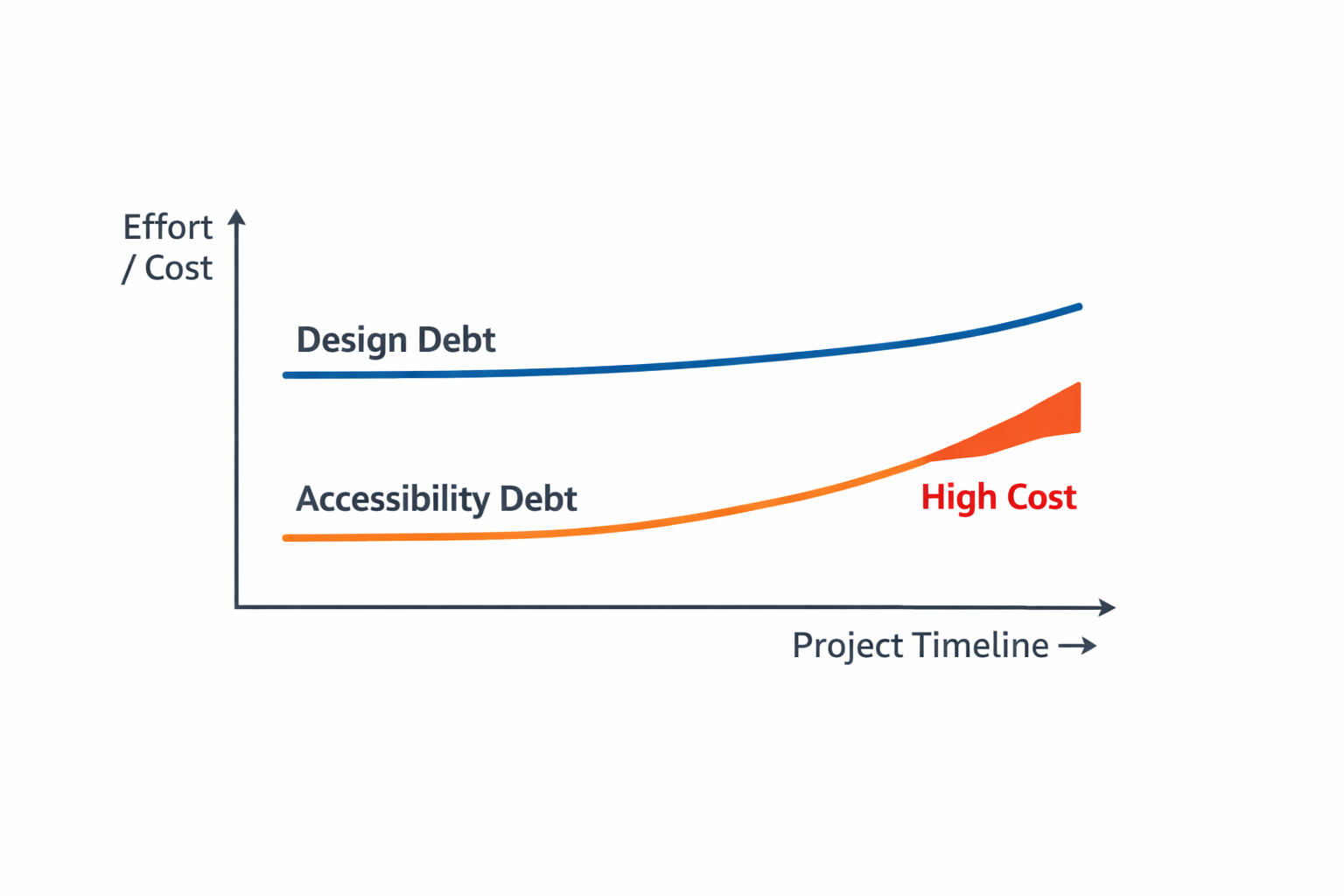
High-performing teams have been shifting left for years, but the term only recently entered the accessibility lexicon. Rather than considering accessibility as an afterthought, teams who do it well embed accessibility into every stage of delivery — from discovery to deployment.
What Shift Left Actually Means
Shift-left accessibility means moving accessibility work earlier in the lifecycle:
- Discovery
- UX
- Design
- Development
- QA
- Release
It’s about preventing issues, not detecting them.
Discovery & UX: Where Accessibility Begins
1. Accessible personas and journeys
Include users with disabilities in personas and scenarios.
2. Early semantic decisions
Structure comes before styling. Teams that define headings, regions, and interactions early avoid rework later.
3. Prototype with accessibility in mind
Keyboard flows, focus order, and error handling should be visible in prototypes.
Design: The Foundation of Accessible Delivery
1. Use accessible components
Designers should work from a design system with accessibility baked in.
2. Document interaction patterns
Design files should include:
- Keyboard behaviour
- Focus states
- Error messaging
- ARIA expectations
3. Run early contrast and structure checks
Catching issues here prevents dozens of downstream failures.
Development: Where Accessibility Becomes Real
1. Component-first development
Build accessible components once, use them everywhere.
2. Accessibility acceptance criteria
Every story should include explicit accessibility requirements.
3. Pairing and code reviews
Developers catch issues earlier when accessibility is part of review culture.
QA & CI/CD: The Safety Net
1. Automated tests
Catch the basics: labels, contrast, headings, ARIA misuse.
2. Manual assistive tech checks
Screen readers, keyboard-only testing, zoom, and reflow.
3. Regression testing
Accessibility regressions are common — automation helps prevent them.
Governance: The Glue That Holds It Together
1. Design system ownership
A maintained system prevents accessibility drift.
2. Documentation and training
Teams need shared understanding, not tribal knowledge.
3. Accessibility champions
Distributed ownership accelerates adoption.
Conclusion
Shift-left accessibility isn’t a process — it’s a mindset. Teams that adopt it deliver faster, reduce risk, and build better products.
Services
Digital Product: Learn how AccessUX helps product teams build accessibility into their design and development process, from early design to delivery.